Bally’s Corporation Revises Mixed-Use Development Plans Near Athletics Ballpark Site
Écrit par Iris Albrecht · 22/8/2026

Bally’s Corporation Revises Mixed-Use Development Plans Near Athletics Ballpark Site
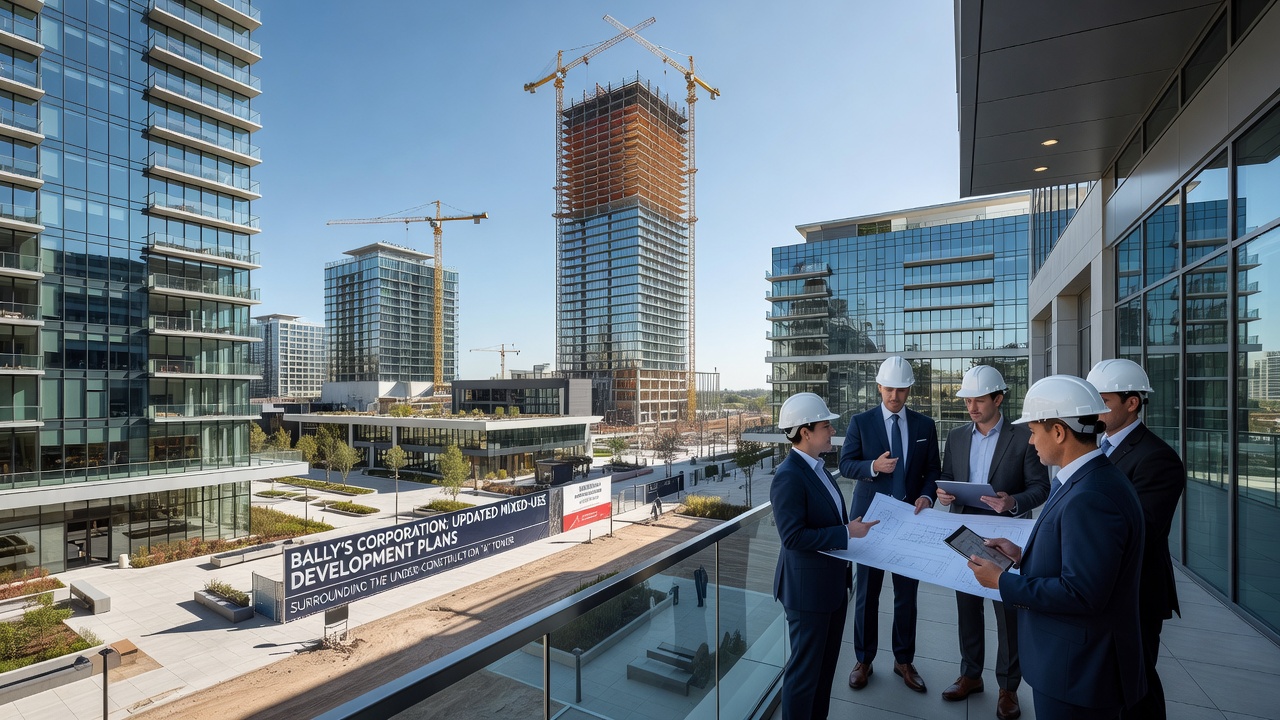
Bally’s Corporation has updated its mixed-use development plans surrounding the under-construction Athletics MLB ballpark on the former Tropicana Las Vegas site, and Clark County has granted approval for key elements including a plaza, parking facilities, and a theater as part of a phased project while full hotel-casino components await further approvals and financing.
The overall project carries an estimated cost of around $1.19 billion with potential completion targeted by 2030, according to the company’s revised filings and county records.
Background on the Site and Initial Plans
The former Tropicana Las Vegas site spans significant acreage along the Las Vegas Strip, and Bally’s acquired the property to integrate entertainment, retail, and residential components around the new ballpark that the Athletics organization is developing in partnership with local stakeholders; this location once hosted a historic resort that closed in 2024 to make way for the MLB venue scheduled for phased openings.
Initial development concepts centered on a full-scale hotel-casino complex paired with the ballpark, yet Bally’s has shifted focus to prioritize infrastructure that supports immediate ballpark operations while deferring larger gaming elements.
Recent Approvals and Phased Approach
Clark County officials reviewed and approved specific components of the updated plans in recent proceedings, and these approvals cover a public plaza designed for events and pedestrian access, structured parking to accommodate game-day crowds, and a theater venue intended for live performances and entertainment programming.
The phased structure allows construction to proceed on these approved elements without delay, whereas the hotel-casino portions require additional regulatory reviews from gaming authorities along with secured financing commitments before groundbreaking can advance.
Project Scale and Timeline Details
Project estimates place the total investment at approximately $1.19 billion across multiple phases, and this figure encompasses land improvements, infrastructure, and building costs tied directly to the mixed-use vision; completion remains projected for 2030 assuming sequential approvals and funding milestones are met on schedule.
Construction activity on the ballpark itself continues independently, and the surrounding development updates align with that timeline to ensure coordinated site access and utility connections.
Regulatory and Financing Considerations
Further approvals for the hotel-casino elements depend on submissions to the Nevada Gaming Control Board and related county planning bodies, while financing arrangements involve private equity partners and potential bond issuances that Bally’s has indicated remain under negotiation; observers note that such phased strategies are common in large-scale Las Vegas projects where regulatory and market conditions evolve over time.
County documentation highlights that the approved plaza, parking, and theater elements meet current zoning and traffic mitigation standards, which clears the path for initial site work to begin without awaiting the full project scope.
Integration With Athletics Ballpark Development
The Athletics ballpark construction forms the centerpiece of the site, and Bally’s revised plans emphasize connectivity through pedestrian pathways and shared parking that will serve both game attendees and future mixed-use visitors; this approach coordinates with the team’s operational needs while allowing Bally’s to manage capital allocation across phases.
County records show that traffic studies and environmental assessments supported the approved components, and these studies addressed impacts from both the ballpark and adjacent developments in a unified review process.
Conclusion
Bally’s Corporation continues to advance its mixed-use vision through the recently approved elements, and the company’s focus on phased implementation reflects standard practices for major Las Vegas developments that balance regulatory requirements with financing realities; the project remains on track for the 2030 horizon as further approvals are pursued.